Humboldt State University (2014). Jogging keeps you young: Seniors who run regularly can walk as efficiently as 20-somethings. [online] Jogging keeps you young: Seniors who run regularly can walk as efficiently as 20-somethings. Available at: https://www.sciencedaily.com/releases/2014/11/141120141436.htm
I feel as though this 6-week intervention has gone really well, as it is evident that progress has been made throughout each week. Even though Dennis didn’t reach his final goal of getting his weight under 80 kg, he has still made a large amount of progress. This is due to his age and physical condition, it has restricted Dennis to take part in high energy workouts. In this case it has meant that it will now take longer than six weeks for Dennis to get his weight under 80 kg. Another reason why Dennis was unable to loose weight is because each day he is currently taking Lorstst for his cholesterol and Nordip for his blood pressure regulation. As well as Asprin that thins his blood. By taking this medication, it only prevents Dennis to loose weight slightly. But in order for it to work Dennis must maintain a healthy diet and exercise regularly, and that is what we aimed to do throughout the intervention.
What was Dennis’ feedback?
Dennis is overall very happy with part taking in this intervention and is glad that he was given the opportunity to get involved in it. He is very positive with the outcome of the intervention as he now know’s what sort of exercises to do for him to loose weight. Now that the intervention is finished for Dennis, he said that he will continue to do the same amount of exercise each week. This is excellent as we have showed Dennis that it is possible for him to try out and complete various workouts throughout the week.
What would I do differently next time?
Something I would do differently next time is to find out and understand the level of difficulty our client is at, through getting Dennis to complete a survey on what intensity he trains at. By knowing this we would be able to set the right training sessions, so that we can achieve the clients end result. By doing this for Dennis we would have been able to start out the intervention by jogging at a slow pace and than increase the pace as each week progressed on. This would have allowed Dennis to loose more weight by getting his heart rate up in more jogging sessions.
Have I changed Dennis’ life?
I believe that we have changed Dennis’ life throughout this intervention as there is evidence of progress and achievements occurring each week. This was made by his dedication to take part in the intervention, as well as stepping up to the challenge and trying new types of exercise over the corse of these past 6-weeks. I believe that Dennis is overall extremely happy with the turn of of this intervention on him as he is now going to continue doing the same amount of exercise in the many weeks going forward.
Monday- Jogging for 60 minutes at 80%. Tuesday- 30 minute PT session with Angela, plus 15 minutes on Cross Trainer at level 10. Wednesday- 60 minute walk along waterfront at Redcliffe. Vacuumed and washed floors at Unit for 1 hour. Thursday- Traveled to Farm. Repaired pump cover, serviced bee hive, went for a walk up to excavator and back for 40 minutes, repeated 20 of them uphill. Friday- Walked to back paddock down hill 45 minutes, then walked back all uphill 50 minutes, very strenuous. Also drove to Tenterfield. Saturday- Drove to Coonabarabran with Granny, went walking at Coonabarabran, explored the town for 90 minutes.
Client feedback
Q1: How intense was the workout? (rate from 1-10)
A: Dennis says that the workout was different due to us going away however we managed to do a reasonable amount of exercise so I would rate the workout an 8/10.
Q2: Are there any changes you wish we to the program?
A: The program has been great for Dennis, so he says thank you.
Q3: Has this program effected your mental health?
A: His mental health is good. The program has been very positive.
Q4: How do you think you have progressed throughout the week?
A: Dennis believes his fitness level has improved each week.
Q5: What did you do in the one hour of physical activity of your choice? Would you continue to do this after the program finishes?
A: The activity of my own choice was exploring Coonabarabran.
Q6: How did our set jogging go?
A: The walking and Jogging were beneficial helped my stiffness in particular.
Q7: Did you miss a training session this week? How do you think your mental health has changed or been affected by this?
A: Dennis didn’t miss any sessions completely, just substituted different activities.
Q8: Since you are now at the end of the intervention, have you seen various changes to your mental health and do you feel as though you are making progress each week?
A: Now that the program is finished, Dennis intends to keep doing a similar level of exercise each week going forward.
Reflection
For the final week of the 6-week intervention, Dennis was really pleased with his results made in the last week. Compared to week fives intervention, Dennis told us the the running was a bit to much for him due to his age. So for this weeks program we toned if down a little by jogging at intense speeds without pushing him too much. In the overview of the week Dennis said that he did jogging at 80% for 60 minutes, which is more hard than what was set for him. Instead this shows us that he is able to set himself exercises that best suits for how he is feeling that day. Dennis feels as though the training program has been very positive, through believing that his fitness levels have improved each week. From this intervention Dennis now has an in site of what sort of activity and exercises he can do to keep his mental health in a stable condition.
Monday- Jogging at Cox’s Road for 45 minutes at 80%.
Tuesday- 30 minute PT session Angela my trainer.
Wednesday- Sailing on Deception Bay with Moreton Bay Yacht Club.
Thursday- Played golf badly as I only got 27 points.
Friday- Jogging at Cox’s Road for 60 minutes at full throttle.
Saturday- Finished new pump installation, Filling trench, laying pipe, repairing fence, which involved 5 hours of lifting, bending, digging, equalled hard work.
Reflection
Q1: How intense was the workout? (rate from 1-10)
A: The workout workout was pretty intense so Dennis rated it an 9/10.
Q2: Are there any changes we need to make to the program?
A: Hopefully as it is nearly finished.
Q3: Has this program effected your mental health?
A: Dennis’s mental health is good as the exercises are producing very positive mental stimulation.
Q4: How do you think you have progressed throughout the week?
A: The programme has got more intense especially this last week, as he is finding the jogging difficult.
Q5: What did you do in the 45 minutes of physical activity of your choice? Would you still like to continue on with this for the following weeks?
A: Worked on the farm for five hours involving lifting, bending, and digging.
Q6: How did our set jogging sessions go?
A: The Jogging is a bit much for him. Dennis said that walking suits him better due to his age and physical condition.
Q7: Did you miss a training sessions this week? How do you think your mental health has changed or been affected by this?
A: No, this week Dennis managed to do all of the set training sessions. His mental health has changed as it took a lot more power and effort to complete the sessions set.
Q8: Since you are now nearing the end of the intervention, have you seen various changes to your mental health and do you feel as though you are making progress each week?
A: Dennis believes that the program has been worthwhile even though is has failed and not succeed to help him loose weight.
Reflection
As we are very close to the end of our six week health intervention, there are a large number of changes and progress that has been made. For instance, Dennis’s heart rate is increasing during out set jogging sessions, which is pleased to hear as it means that the intensity of the sessions is at the right rate for him. This is because Dennis can feel that he is pushing himself. Whereas, Dennis would prefer to part take in walking sessions as it is better for his overall physical health and his age. However, Dennis is enjoying the training program a lot apart for the fact that he hasn’t lost any weight. For this to happen it might take Dennis more than six weeks to get his weight under 80kg. Reasons for this are that he is at a old age so he prefers to walk and do low intensity jogs and not run at 80%.
Monday- Sorted cattle, 2 hours of herding into crush and weighing an then sorting for sale. Lots of running arm waving and shouting. Picked beans for 1 hour which involved lots of squats.
Tuesday- Personal training session with Ange my personal trainer. Bike for 20 minutes, cross trainer for 10 minutes, 40 lunges with 10 kg weights in each hand, floor exercises for 10 minutes.
Wednesday- Drove to Byron Bay to visit coffee plantation and attend a meeting. Lots of walking and talking.
Thursday- Played Golf then drove to the farm in truck, lots of bouncing.
Friday- Farm work, repairing cattle troughs, a shovel, crowbar, spanners, saw, and hammer was in use.
Saturday- Built gabion for stone fence which required 1 hour, repaired more cattle troughs for 4 hours. Went for a long walk to back paddock, 1 hour.
Sunday- Completed trench for electrical cable to dam for water pump. Used shovel and crowbar for 4 hours. Levelled area for cement slab for pump, 1 hour.
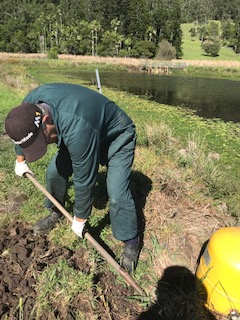
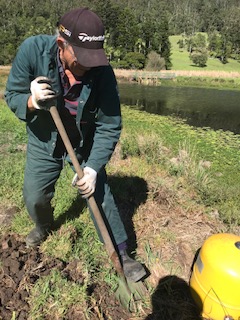
Dennis digging trench.
Dennis digging trench for electrical cable.
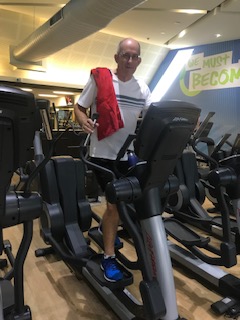
Dennis running on bike in personal trainer session.
Lunges with weights in hand in personal trainer session.
Client feedback
Q1: How intense was the workout? (rate from 1-10)
A: Dennis said that the workout ranged from 5-10 when he was digging the trench.
Q2: Are there any changes we need to make to the program?
A: There are no changes needed to be made, but Dennis said he is happy with the longer training sessions.
Q3: Has this program effected your mental health?
A: His mental health is fine.
Q4: How do you think you have progressed throughout the week?
A: Dennis said that he felt really well on Monday as a result of the exercise during the week.
Q5: What did you do in the 45 minutes of physical activity of your choice?
A: He did jobs around the farm but will need extra time.
Q6: How did our set jogging/running sessions go?
A: During the jogging and running sessions, Dennis got his heart rate up fairly high.
Q7: Did you miss a training session this week? How do you think your mental health has changed or been affected by this?
A: Dennis did not miss a training session this week so his mental health is fine, training was in excess of the set program.
Q8: Since you are getting closer towards the end of the intervention, have you seen various changes to your mental health and do you feel as though you are making progress each week?
Dennis said that he feels great, like I’m ten years younger.
Reflection
In this weeks health intervention program, we saw lots of progress made with very positive feedback from Dennis. He is really enjoying the longer training sessions as he is able to achieve more and gets his heart rate up. Dennis feels good with getting his heart rate up as he feels that the training program is working. He really likes that we added extra time for his physical activity sessions on Sunday as he was able to get more jobs done. He would us to extend the time for the training sessions as he is happy with training for longer, as it increases his heart rate. Dennis has so far lost 1.5 kg, and I think that the running training sessions have really helped with this. By giving more running sessions we will be able to get Dennis’s weight under 80 kg as he is currently at 82.5 kg.
5 min jogging/ walking intervals x 2 (total 20 min)
½ hour PT session
Golf
Golf
10 min jog, 5 min run x 2 (total 30 min)
At least 30 minutes of physical activity of your choice.
Client feedback
Q1: How intense was the workout? (rate from 1-10)
A: Dennis rated the workout an 7/10.
Q2: Are there any changes we need to make to the program?
A: Dennis says that there are no changes that are needed to be made to the program.
Q3: Has this program effected your mental health?
A: His mental health is still go, so the program isn’t effecting it.
Q4: How do you think you have progressed throughout the week?
A: Dennis says that he has progressed very well throughout the week.
Q5: What did you do in the 30 minutes of activity of your choice? Would you like to continue on with this for the following weeks?
A: In this time Dennis worked on chores and jobs that need to be done around the farm, digging and using the chainsaw.
Q6: How did our set walking/jogging/running sessions go?
A: He says that our set sessions were all good.
Q7: Did you miss a training session this week? How do you think your mental health has changed or been affected by this?
A: Dennis says that all training sessions went well this week with no issues, so his mental health is fine.
Q8: Since you are now half way through the intervention, have you seen various changes to your mental health and do you feel as though you are making progress each week?
A: Dennis said that he’s feeling extremely well, and is really enjoying the extra physical activity. But says that unfortunately he hasn’t lost any weight.
Reflection
Based on Dennis’s feedback for our week 3 intervention, there are some things that are going very well and others that aren’t. However, we now know that our set walking, jogging, and running sessions are going really well for him. Some good things are that his mental health is not being affected, and that Dennis didn’t miss a training session this week. He is also really enjoying the 30 minutes of physical activity of his choice, as Dennis is able to complete various jobs around the farm. In this weeks reflections questions we added a new question regarding how the intervention is going since he is half way through the 6 week intervention. In this question Dennis said that everything is going really well, but unfortunately isn’t losing any weight. This now means that we will have to increase the level of physical activity. This will be done by making the intensity higher and adding on more time to our set sessions.
5 min jogging/ walking intervals x 2 (total 20 min)
Complete any needed jobs around the farm
Overview of week
Sunday- 30 minute walk. Monday- Planned to go walking in the afternoon but instead stayed home due to bad weather. Tuesday- 30 minute Gym session with Ange my personal trainer. Wednesday- Dennis went to a conference which involved lots of talking. Thursday- Played Golf. Friday- Farm work, involved unloading truck and cleaning shed. Saturday- At farm, pruned avocado tree and mulch branches, 4 hours of hard labour. Sunday- Farm day, cut and split fire wood, included of 4 hours of hard work.
Client feedback
Q1: How intense was the workout? (rate from 1-10)
A: Dennis rates this workout an 8/10.
Q2: Are there any changes we need to make to the program?
A: There are still no changes to be made at this point as programme is going well.
Q3: Has this program effected your mental health?
A: No, the program has not effected his mental health as it is good.
Q4: How do you think you have progressed throughout the week?
A: Dennis has progressed throughout the week by getting a good amount of exercise from the training program but also keeping active by doing work out on the farm and playing golf.
Q5: How did you find the gym class? What went well and what didn’t work?
Instead of part taking in a gym class this week, Dennis instead completed different jobs around the farm and also repeated Friday’s training session.
Reflection
The second week of the training program contained of increasing the intensity of the workouts/walks and applying the changes that had to be made. Dennis followed the training program that was set and conducted his own physical activity when required. This is seen when Dennis gets involved in doing various jobs on the farm as explained in the overview of the week.
From Dennis’ feedback I am unsure as to how he is finding the walking sessions we have set him, as there is no real discussion about it in his feedback. After we talk further with Dennis about this we will know how our set sessions are going for him, if any changes need to be made, and if his is actually part taking in them. This will included a question for him to answer regarding how the set walking sessions went. There will also be another question about if you had missed a session, how you think you mental health has changed or been affected by it.
Something new that we are going to add for the following weeks of the intervention is for Dennis to measure his waist at the end of each week. This is so we can ensure that Dennis is still losing weight and not putting on any.
Tuesday- 30 minute Gym session with personal trainer.Wednesday- At farm spent day unloading truck then building composting cage. This involved lots of lifting, bending, squatting, and walking, over several hours. Thursday- Completed building composting cage then spent time building stone fence and then cutting fire wood. Which involved lots of bending, squatting, walking over several hours. Friday- Finish cutting fire wood, load truck, involving lots of bending, squatting and walking over several hours. Saturday- Washed truck, pick beans, bury pipe, drive home from farm. Contained lots of bending, squatting, walking over several hours. Sunday- 8.4 kilometre walk.
Client feedback
Q1: How intense was the workout? (rate from 1-10)
A: Dennis rated the workout an 8/10.
Q2: Are there any changes we need to make to the Program?
A: Dennis is so far happy with the proposed program and doesn’t think that any changes will need to be made at this point.
Q3: Has this program effected your mental health?
A: Dennis says that his mental state hasn’t changed and that he is still enjoying life.
Q4: How do you think you have progressed throughout the week?
A: Dennis has progressed throughout the week by having a good week with plenty of exercise.
Q5: How did you find the gym class? What went well and what didn’t work?
A: Dennis said that he will be unable to attend gym classes on Saturday and Sunday as he will be at the farm.
Reflection
Since receiving feedback from Dennis, there are certain changes that are needed to be made. Overall Dennis’s feedback was fairly alright with no changes to be made majorly. One thing that needs to be changed on our weekly training program is the gym class on either Saturday or Sunday. This is because Dennis will be at the farm on most weekends. From here we will need to consider something else for Dennis to do and complete on the weekends. This may include increasing the intensity or the time of the sessions each day as he will have more time to get further into the program.
Our overall plan is to implant a six week health intervention on physical health, to help improve the amount of physical activity in Dennis’s life. At the start of the intervention we will introduce fast pace walking for around 20 minutes that will gradually increase each each week. As we get later into the intervention, the fast pace walking will change to a light jog. On some days of the week Dennis will go to a gym class such as water aerobics. On Tuesday, Dennis goes to half an hour gym session lead by a personal trainer. On Wednesday and Thursday, he plays golf for around two to three hours.
The 6 week health intervention program will be constructed in the form of a training program. The training program will have the number of the week (1-6) and and the days in which the program will take place on. Under each of the days it will have the activity or exercise to be completed for that day. On either Saturday or Sunday Dennis will take part in a gym class of his choice. In his weekly reflections Dennis will let us know what gym class he chose and how he thinks it went.
We have obtained medical advice and information through our research making it safe for men over 70 years of age. As older men can have a limit as to how much physical exercise they can consume in a day.
Dennis is alright with us sharing his journey and progress on our blog. That way Dennis can also see his progress as the weeks go on.
Yes, we have had our intervention seen by a teacher to check for suitability and safety as our training program is eligible for our client to take part in.
Intervention- weekly training programs
This is the training program as how it is originally set. There will be changes made to this each week that you will see under the week 1-6 blog posts.
DAY
MON
TUES
WED
THUR
FRI
SAT/SUN
WEEK 1
X
½ hour PT session
Golf
Golf
Fast paced walk @ 80% for 20 mins
Gym class
WEEK 2
Fast paced walk @ 80% for 30 mins
½ hour PT session
Golf
Golf
5 min jogging/ walking intervals x 2 (total 20 min)
Gym class
WEEK 3
5 min jogging/ walking intervals x 2 (total 20 min)
How can a six week physical exercise health intervention improve the lifestyle of 70-year-old man?
Sub-questions:
How does physical exercise improve your mood/mental health?
Is exercise the most efficient way to lose weight?
What are the consequences of not being physically active?
How much physical exercise/activity is recommended for 70-year-old-men?
Question 1:
How does physical exercise improve your mood/mental health?
Physical exercise can improve your mood and mental health in a number of ways. One of these ways is by exercising regularly as it can have a profoundly positive impact on depression, anxiety, ADHD and many more. Regular exercise is good for you as it also relieves stress, improves memory, helps you sleep better, and which then can boost your overall mood. Most people who exercise regularly tend to do so because it gives them an enormous sense of well-being. They will feel more energetic throughout the day, have better sleeps at night, have sharper memories, and feel more relaxed and positive about themselves and their lives. Exercise is also a powerful medicine for many common mental health challenges.
Regular exercise can also help to lift your mood as it helps to boost the production of ‘feel-good’ chemicals in your brain. The “feel-good” chemicals of endorphins and serotonin are increased in your brain through the use of physical activity. This is because the chemicals helps to distract your mind from the anxious thoughts that are in your brain.
HelpGuide, 2019
Choosing an activity that you enjoy that fits easily into your lifestyle is important, as if you don’t it can create stress. Aerobic activities such as swimming, jogging, and cycling can significantly raise your heart rate and get your blood pumping. Every little bit of any activity, no matter what you choose or what intensity level you exercise at, can be beneficial to help improve your physical and mental health.
Question 2:
Is exercise the most efficient way to lose weight?
The are serval different ways in which you can lose weight as many people choose to lose weight in a way that suits them the most. The main form of losing weight is through exercise, as exercise can help you achieve the goal of losing weight by burning off some extra calories. However, study’s suggest that “too much exercise is actually more dangerous for your heart than not being active enough.” According to the U.S Department of Health, a normal amount of exercise consists of 2.5 hours a week of moderate exercise or 1 hour 15 minutes of strenuous aerobic workouts is beneficial for your health. It is shown that too much exercise can leave you exhausted, find yourself always sick or feeling depressed, upset your sleep schedule, leave you feeling sore for days at a time, and have a short fuse. Some serious warning signs of too much exercise includes of having trouble breathing, chest pain, excessive sweating, severe dizziness, numbness and tingling, and make you overall feel off or out of it.
Augusta Health, 2019
A new study observed 3,175 men and women over 25 years and looked into the connection between working out and atherosclerosis, which is the fat accumulation in arteries which can lead to heart attacks. This investigation revealed that “white men who exceeded three times the recommended guidelines of exercise were at a higher risk of fat building up on their arteries by the time they reach middle-age.” Cardiologist Dr. Joel Jahn told CBS News that “There is a stress reaction to long distance and long duration exercise – your cortisol is up for a long time”. Dr. Jahn advises that to reduce your cortisol levels after a long work out, you should practice stress-reducing meditation or yoga. In the end this study did find that people who didn’t exercise enough were more likely to have high blood pressure and type 2 diabetes.
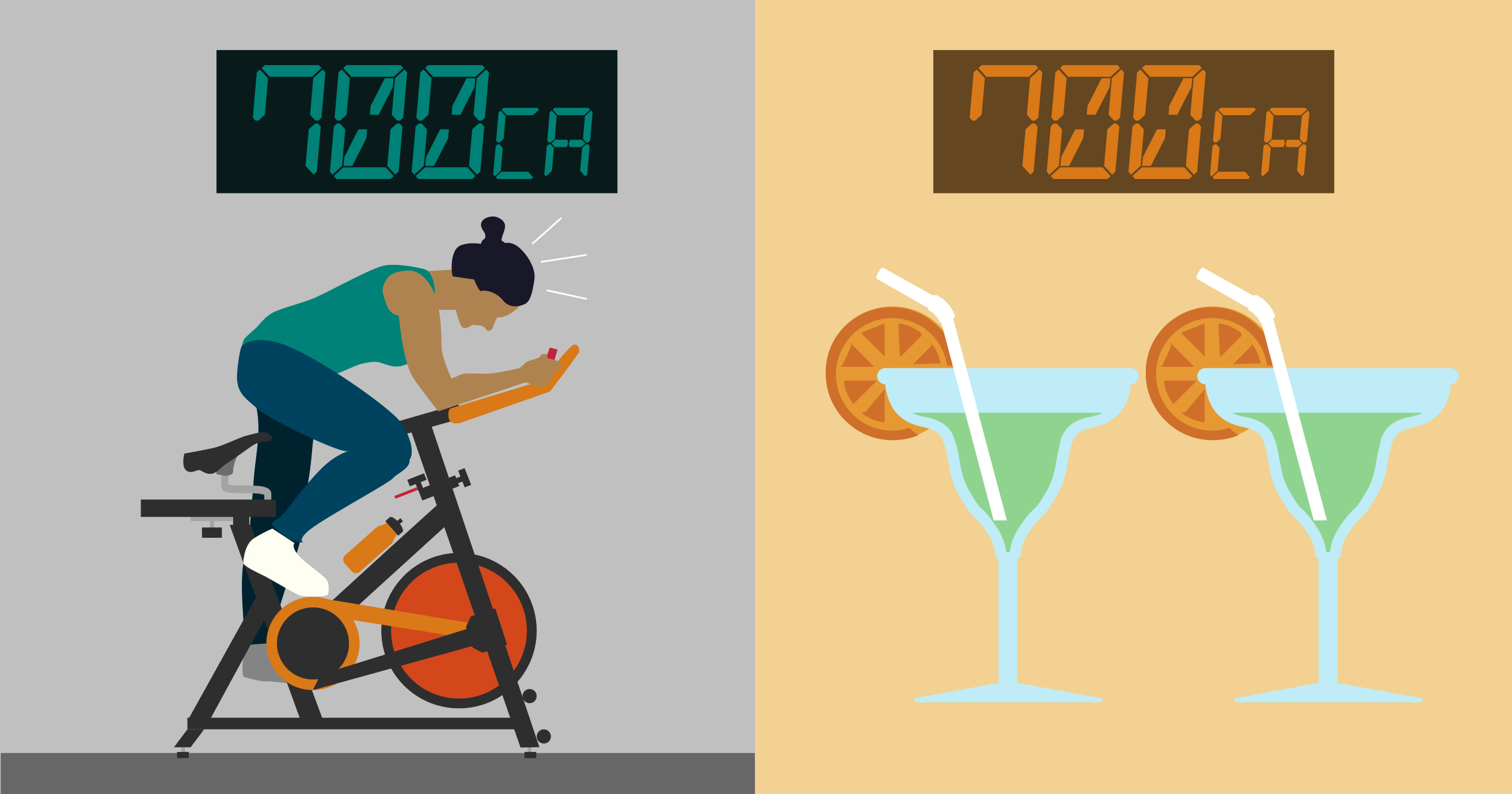
Some people also claim that exercise isn’t effective for weight loss on its own. This is because exercise increases hunger in some people, making them eat more calories than they burned during the workout. It has been suggested that exercise may make you overestimate the number of calories you’ve burned and reward yourself with food. This can prevent weight loss and even lead to weight gain as exercise burns calories, uses up your glycogen and stimulates your appetite. When you exercise it also dehydrates you and if you don’t drink enough water before, during and after your workout, you’re going to feel hungry. According to weight-loss experts, “exercise works great for weight maintenance, but not weight loss.” Exercise is also important for decreasing belly fat, reducing your risk of heart disease and diabetes, and increasing your level of happiness. You can tame your hunger after exercising through, meal timing, meal composition, hydration, pre-workout fuel, and mindful eating.
Vox Media, 2019
Despite all of this there are other ways that can be used for weight loss apart from exercise. The ‘National Academy of Sports Medicine’ say that the most effective way to lose weight is to combine resistance training with aerobic exercise. Aerobic exercise can burn a large number of calories in a short period of time, but burns very little extra calories after a workout. Resistance training however burns a lot of calories after a workout through a mechanism known as excessive post exercise oxygen consumption. This means if you do both resistance training and aerobic exercise you’ll burn large amounts of calories over the course of a day if you combine the two. Exercising is certainly a tedious task and is not everyone’s cup of tea. Most people cannot devote enough time for a full-fledged workout regimen, but there are some exercise alternatives that can still help you to lose weight without exercising. These alternatives incorporate of being active, counting your calorie intake, avoiding junk food, drinking water or herbal tea before each meal, avoiding late night snacks, having proper sleep, and even laughing often is considered good for losing weight without exercising.
Therefore exercise can be the most efficient way to lose weight but is sometimes not suitable for most people. Consequently there are other forms of losing weight without exercising which include of burning off calories, eating and drinking healthy, and getting good hours of sleep. When this is all considered it can turn out to be more effective than exercising.
Question 3:
What are the consequences of not being physically active?
Not matter what age you are, your physically activity plays an important part in your health and well-being. Some people may think that only sportsmen and women need to have physical activity into their lives. However everyone needs to keep their bodies working well in order to be healthy. Physical activity is necessary as it will stimulate the body’s own natural maintenance and repair system. Your bones, joints and muscles, especially your heart, will actually stay younger if you keep them busy. If you are not physically active you increase your health risks in many ways. Physical activity and exercise can have immediate and long-term health benefits, which is important as regular activity can improve your quality of life.
Therefore, there are many consequences that are considered when you are not being physically active. Your health risks can increase in many ways due to not being physically active. These health risks include of Coronary Heart Disease, strokes, high blood pressure, breathlessness, flabby body, little energy, stiff joints, osteoporosis, poor posture, overweight.
There are three main components that are considered when it comes to being healthy, which are stamina, strength and suppleness. Stamina is important for being healthy as stamina is the strength and energy that allow you to sustain physical or mental effort for long periods of time. Increasing your stamina helps you endure discomfort or stress when you’re doing an activity. Having high stamina allows you to perform your daily activities at a higher level while using less energy. You can increase your stamina through exercise, music, caffeine, yoga and meditation.
PowerBar, 2017
PowerBar, 2017
Strength training is also apart of being healthy as it increases bone density, builds a stronger heart, reduces your resting blood pressure, improves blood flow, halts muscle loss, helps control blood sugar, improves cholesterol levels, and improves your balance and coordination. Muscular strength and endurance are also important for many reasons as it raises your ability to do activities like opening doors, lifting boxes or chopping wood without getting tired and reduces the risk of injury, which can lead to healthier, stronger muscles and bones. Benefits of strength training include, increased muscle mass, stronger bones, joint flexibility, weight control, and balance.
American Cancer Society, 2019
Suppleness is considered good for being healthy as stretching your body to become more supple and flexible offers many physical benefits. Such training allows for easier and deeper movements while building strength and stability. Stretching your muscles and joints also leads to greater range of motion, improved balance, and increased flexibility. Improved flexibility produces a wide range of physical benefits and can have a positive effect on your overall well-being. Increased flexibility is likely to help you through having fewer injuries, less pain, improved posture and balance, a positive state of mind, greater strength, and improves your physical performance.
Pocket Outdoor Media, 2019
Question 4:
How much physical exercise/activity is recommended for 70-year-old-men?
It is recommended that seniors age 65 and older get at least 2.5 hours of moderate aerobic exercise every week. That averages out to about 30 minutes on most days of the week. Examples of moderate activity includes of , walking very brisk at 6 kph, cleaning heavy such as washing windows, vacuuming, mopping, mowing lawn with a power mower, bicycling light effort at 16-19 kph, badminton recreational, and tennis doubles. Apart from moderate exercise, you can also do 1 hour and 15 minutes of vigorous exercise each week. Vigorous exercise can include of, hiking, jogging at 10 kph, shovelling, carrying heavy loads, bicycling fast at 23-26 kph, basketball or soccer game, and tennis singles.
Experts say seniors should aim to be as active as possible. If you are an older adult, you can reap the many benefits of exercise to live a longer, healthier life. It is in fact safe for most adults older than 65 years of age to exercise. Even patients who have chronic illnesses can exercise safely. These include heart disease, high blood pressure, diabetes and arthritis. And because of exercise, many of these conditions are improved and benefit from it.
American Academy of Family Physicians, 2019
In addition, many seniors should incorporate physical activity into your daily routine. Some examples of working more activity into your day include, taking the stairs instead of the elevator, parking farther away from your destination, walking or biking places instead of driving, walking your dog, working in the yard, and doing light exercises while watching TV.
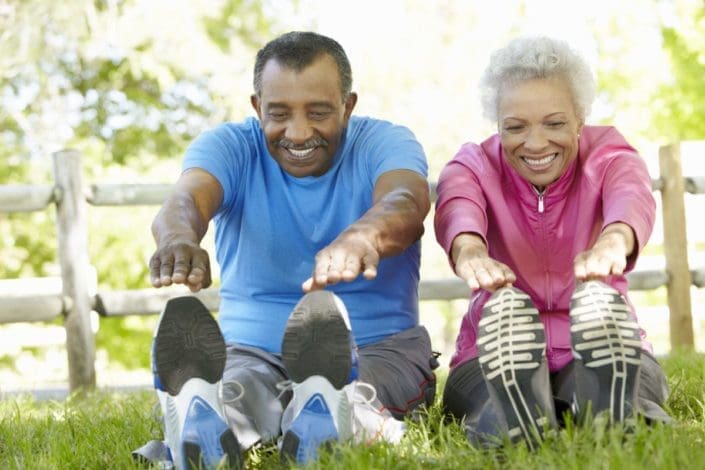
It is also important for seniors to warm up and cool down after and sort of exercise or physical activity. A warm-up and a cool-down both involve doing exercises at a lower intensity and slower pace. This is good ad it improves your athletic performance, prevents injuries, and helps with recovery from exercise. By doing a warm up before any physical exercise is necessary as it, improves your performance, blood flow, and oxygen efficiency, as well as having faster muscle relaxation, injury prevention, and mental preparation. A cool down is also an important part of exercising as it helps you to recover after intense exercise, and reduces delayed onset muscle soreness. Consequences of not warming up and cooling down consist of, increased risk of injury, blood pooling, and increased stress on cardiovascular system.
It is important to know what physical activity is right seniors and how long they should exercise for as it can have many benefits and defaults due to the time, length of the activity, and the before and after processes.







 Steph's health intervention blog